
 Egyptian
 Guardian
 Mage
Ability
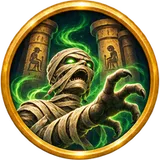
Curse of the Tomb
Gains a 130 / 190 / 400 shield for 4s and curses enemies within 1 hex: 90 / 130 / 260 magic damage and Hex for 5s.
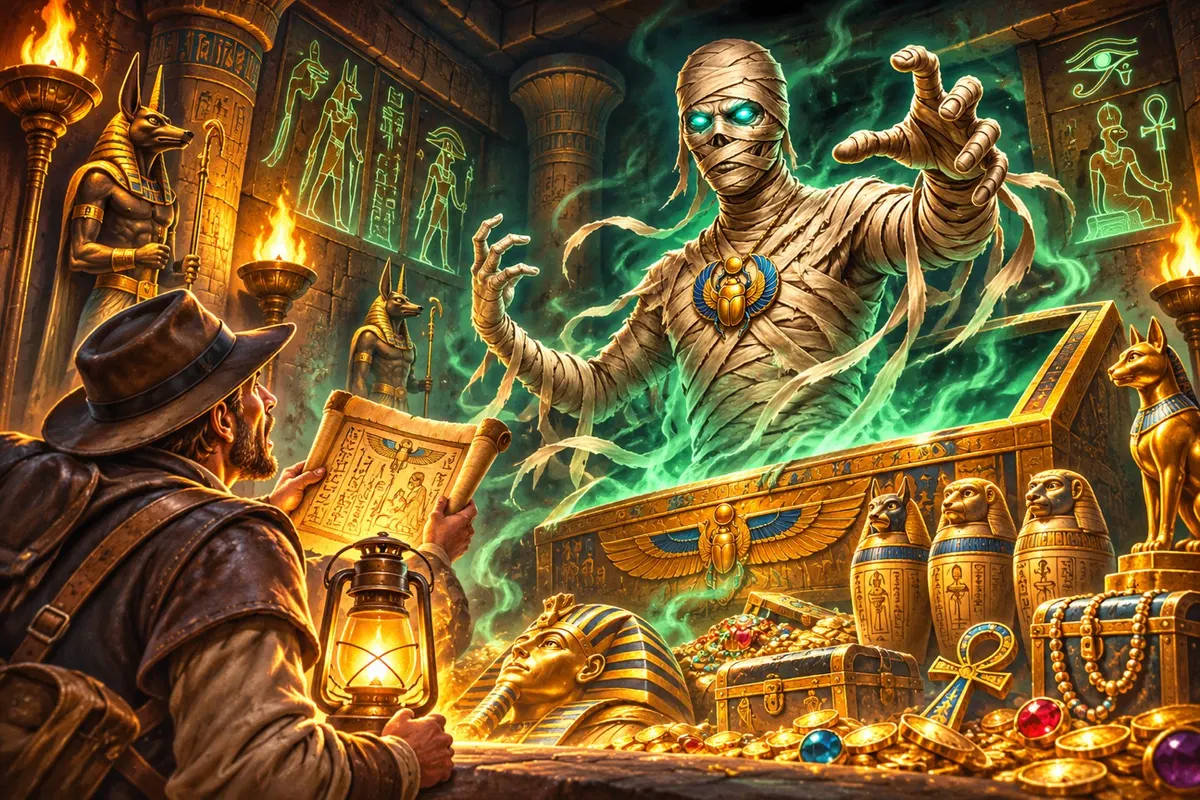
The tale of the mummy
The ancient Egyptians believed that a person lived on after death, but only if their body survived. The soul had several parts: the ka, the life force, which stayed in the tomb, and the ba, often shown as a bird with a human head, which flew out by day and came back to the body at night. If the body rotted away, the ba would have nowhere to return to.
So the Egyptians learned to preserve the dead. Following the example of Anubis, who embalmed Osiris, the priests removed the brain through the nose and the organs through a cut in the side. The organs were dried and kept in four canopic jars, guarded by the four sons of Horus. Only the heart stayed in the body, because it would be weighed in the afterlife. Then the body was dried for forty days under natron, a natural salt, filled with linen and spices, wrapped in hundreds of metres of linen bandages, with protective amulets tucked between the layers, and covered with a mask.
The tomb and the curse
The mummy was laid in its coffin with everything it would need for eternity: food, furniture, clothes, jewellery and little servant figures called shabti, which would do the hard work in the afterlife for them. Spells from the Book of the Dead helped the soul on its journey.
Some tombs had warnings carved at their entrances. One says: As for anyone who enters this tomb in a state of impurity, I shall seize his neck like a bird's. These were real threats against robbers. Egyptians feared that disturbing a tomb could cut a soul off from the afterlife.
The curse of Tutankhamun
In November 1922 the archaeologist Howard Carter opened the tomb of the young pharaoh Tutankhamun, almost untouched for more than 3,000 years. When the expedition's sponsor, Lord Carnarvon, died a few months later from an infected mosquito bite, newspapers around the world announced "the curse of the pharaohs". Every later death connected to the dig made headlines, though Carter himself lived for another 17 years.
From then on the mummy became a monster of the cinema, from Boris Karloff in The Mummy (1932) to the films of 1999: an ancient corpse that wakes when its seal is broken and walks, slow and grim, to punish the living.
Mummy in Battle of Myths
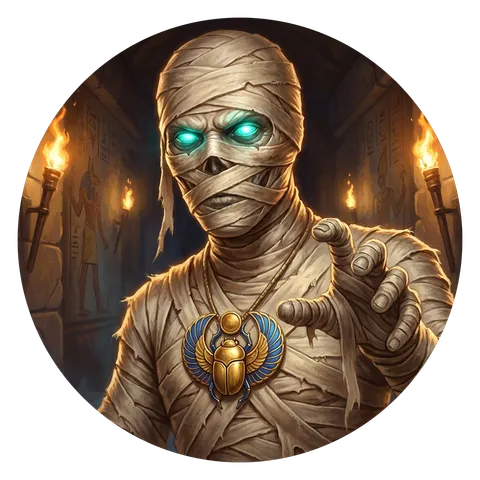
The Mummy is a cost 1 Egyptian guardian and mage. Its ability, Curse of the Tomb, wraps it in a shield and curses every enemy standing close, dealing magic damage and hexing them. As its quote says: you broke the seal, you read the curse aloud; what did you expect to happen next? With every Egyptian hero it shares the Sun Cycle: by day the Egyptians strike faster, and at nightfall they are shielded.
Did you know?
- The word mummy comes from the Persian mumiya, a kind of bitumen, because people thought the black resin on old mummies was tar.
- Egyptians also mummified animals: cats, crocodiles, ibises, falcons, even bulls.




 Be there at launch

One email when Battle of Myths reaches the App Store and Google Play. Nothing else.
On Android? Join the Android beta and play now. We use your email only for this, see privacy.